Skip to content

LaTeX Ninja'ing and the Digital Humanities

The verb "to ninja" means "to act or move like a ninja, particularly with regard to a combination of speed, power, and stealth." LaTeX adventures, demystifying digital tools for Humanists, one tutorial at a time.

Search

Topics, Series, & Categories

Get the code on Github.io

Support on Patreon

  • Patreon

Donate

Buy me coffee!

If my content has helped you, donate 3€ to buy me coffee. Thanks a lot, I appreciate it!

€3.00

Past posts

Tags

#100DaysofDH #TwitterStrategy academic cv Computational Humanities cv CV template deliberate practice DH Twittersphere LaTeX Noob learning how to program learn programming Programming scicomm Teaching tei Transkribus Twitter TwitterEngagement XML XSLT

Top Posts & Pages

  • Typesetting Code in LaTeX
    Typesetting Code in LaTeX
  • Fancy Headers and final Footers in LaTeX
    Fancy Headers and final Footers in LaTeX
  • LaTeX for Archaeologists: An archaeological catalogue from a spreadsheet
    LaTeX for Archaeologists: An archaeological catalogue from a spreadsheet
  • Top 5 magic LaTeX packages you didn't know about
    Top 5 magic LaTeX packages you didn't know about
  • Towards Critical Computational Humanities
    Towards Critical Computational Humanities
  • Guesstimating Environmental Impacts of LLM Workflows
    Guesstimating Environmental Impacts of LLM Workflows
  • Floating minipages and other wizardry
    Floating minipages and other wizardry
  • Your first time tweaking a .cls file on the example of creating switchable colour themes
    Your first time tweaking a .cls file on the example of creating switchable colour themes
  • How to create training (ground truth) data to improve OCR/HTR
    How to create training (ground truth) data to improve OCR/HTR
  • Training my own Handwritten Text Recognition (HTR) model on Transkribus Lite
    Training my own Handwritten Text Recognition (HTR) model on Transkribus Lite

LaTeX Ninja’ing and the DH

The verb “to ninja” means “to act or move like a ninja, particularly with regard to a combination of speed, power, and stealth.”

LaTeX adventures, demystifying digital tools for Humanists, one tutorial at a time.

  • Github.io
  • About
  • Home
  • Twitter
  • Github

Recent

  • Towards Critical Computational Humanities 8. October 2026
  • DH as a discipline and the sub-disciplines of DH 13. September 2026
  • Opportunities and Limitations of Computational History 21. June 2026
  • Why the Digital Humanities Haven’t Embraced Data Feminism 31. May 2026
  • Why Looking More Closely at Our Data Is the Way to Better Research Ethics 17. May 2026
Follow LaTeX Ninja'ing and the Digital Humanities on WordPress.com

Follow The Ninja

  • X
  • GitHub

alchemy

Read more

beginner friendly, Computational Humanities, DH tools and techniques, LaTeX, Tutorials, XML & Annotation  2 Comments

6. September 2024

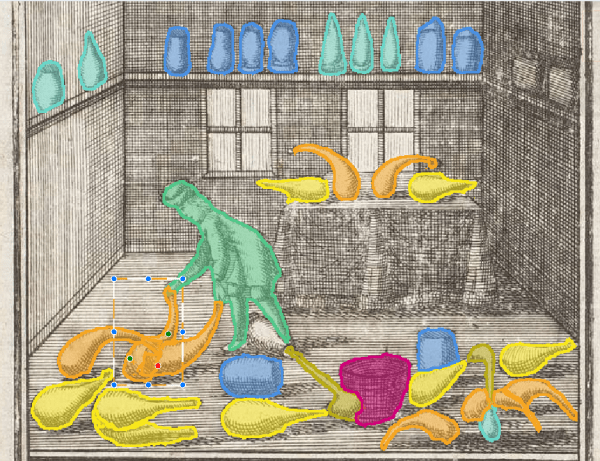
How to create your own fine-tuning or training dataset for computer vision using Supervisely

In an earlier post, I described the considerations that go into creating a training dataset for Computer Vision, including how

read more How to create your own fine-tuning or training dataset for computer vision using Supervisely

Read more

Advanced LaTeX, beginner friendly, Digital Humanities, LaTeX, Tutorials  4 Comments

9. November 20184. February 2019

Typesetting Historical Print

In today’s tutorial I will show how to reproduce a beautiful example of historical print using XeLaTeX. The inspiration for

read more Typesetting Historical Print

Blog at WordPress.com.
Privacy & Cookies: This site uses cookies. By continuing to use this website, you agree to their use.
To find out more, including how to control cookies, see here: Cookie Policy
  • Subscribe Subscribed
    LaTeX Ninja'ing and the Digital Humanities
    Join 100 other subscribers

    Have a WordPress.com account? Log in now.

  • LaTeX Ninja'ing and the Digital Humanities
    View site in Reader
    Manage subscriptionsSign upLog in
    Report this content
    Collapse this bar
Loading Comments...