
In 2017, I had an internship at the German Historical Institute in Paris, where my task was to annotate around 1,200 regests. My job was to get them from source data in a Word document to TEI-XML in the end, but the project requirement was to keep everything in Word as long as possible. So, the annotations had to be done using Formatvorlagen (which I believe is called ‘macros’ or ‘stylesheets’ in English). In this post, I want to reflect on what helped me finish the annotation in three weeks (when previous estimates were that it would take about a year). Even if your project is different from this setup, these learnings may help you make your own annotation projects more efficient. Back then, I wrote a tutorial for people in the project who might want to continue my approach after I was gone. It’s in German but you can use LLMs to translate it for you if you’re interested.
DH demystified for non-DH
Like “DH etiquette”, “DH demystified” is supposed to ‘bridge the gap’ between Digital Humanists and ‘Normal Humanists’. In my time working in the DH, I have met many ‘Normal Humanists’ who really wanted to become part of the DH but because they still lacked certain technical qualifications at the time, DH people weren’t very inclusive towards them. Many of them were my friends and thus, had somebody who could introduce them when no one else would. But that also made me realize that not everybody did have a helping DH person. This is what this category is intended for, to provide (mostly technical) information to facilitate ‘Normal Humanists’ to enter the DH world when they don’t have formal education available or are just at a point in their career where they can’t simply “go back to school” for whatever reasons they may have.
How to write a (Digital Humanities) abstract? Lessons Learned from Reviewing
Writing abstracts and conference submissions is a key element of academic life, yet, I find that there is little guidance for those new to the activity. There are many things to know that will (in my experience) drastically increase your chances of getting accepted. Acting as a reviewer teaches you a lot about becoming a better writer, just like evaluating applications teaches you how to write good applications. However, only very few young academics actually get the opportunity to see the other side of the process. Usually, evaluation work is dominated by more senior academics, leaving newcomers dependent on their guidance, support, and mentorship. But not everybody has equal access to dedicated mentors with enough time on their hands to help teach you these basics effectively. It’s a flaw in our academic system that we invest so little time and energy in training but it’s not the individuals’ fault – the system simply doesn’t value activities that don’t result in
read more How to write a (Digital Humanities) abstract? Lessons Learned from Reviewing
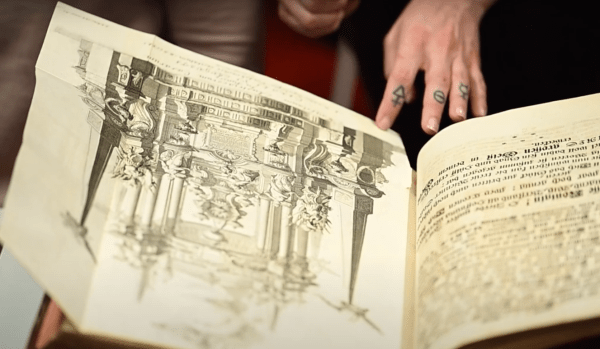
Why Do We Need to Digitize the Materiality of Pre-Modern Books?
Understanding the material aspects of historical books is crucial. Unlike modern books, copies from the same print run of historical
read more Why Do We Need to Digitize the Materiality of Pre-Modern Books?
What’s the deal with modelling in Digital Humanities?
Modelling is central to the Digital Humanities. Even so much that some claim it is what unites the DH as a field or discipline! But what is modelling? What do we mean by it anyway? This post will hopefully provide you with the primer you need. Sorry for the very sporadic blogging lately. I still haven’t figured out how to include blogging into my PostDoc life. I think I want to get to a rhythm of around 1-2 posts per month. More than that is absolutely not realistic but, as you may have realized, I didn’t even manage that consistently over the last year. Then again, it’s not like I’m not producing teaching materials anymore. Most of my efforts this year have gone into all the classes I have been teaching (I’m hoping to share slides and teaching materials for all of them once they are cleaned up) – I have taught an intro to text mining, my usual information
read more What’s the deal with modelling in Digital Humanities?
What you really need to know about Digital Scholarly Editing
Today’s post is a short introduction to digital scholarly editing. I will explain some basic principles (so mostly theory) and point you to a few resources you will need to get started in a more practical fashion. I’m teaching a class on digital scholarly editing this term, so I thought I could use the opportunity to write an intro post on this important topic. How does a Digital Edition relate to an analogue scholarly edition? Unlike analogue scholarly editons, digital editions are not exclusive to text and they overcome the limitations of print by following what we call a digital paradigm rather than an analogue one. This means that a digital edition cannot be given in print without loss of content or functionality. A retrodigitized edition (an existing analogue edition which is digitized and made available online), thus, isn’t enough to qualify as a digital edition because it follows the analogue paradigm. Ergo: It’s not about the storage medium. A
read more What you really need to know about Digital Scholarly Editing
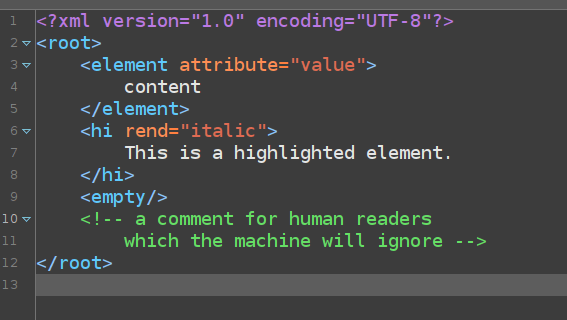
A shamelessly short intro to XML for DH beginners (includes TEI)
As some of you might know, I have been promising to provide an intro to XML for a long time.
read more A shamelessly short intro to XML for DH beginners (includes TEI)
The most important book to read if you want to learn Digital Humanities, Computer Science, Maths, Programming or LaTeX
Today I wanted to share a tiny book review of the book I claim to be the most important book you should read if you want to learn any technical topic but are unsure if you are up for it. The book I’m talking about is not Donald Knuth (although his books are highly recommended, especially if you’re a (La)TeX nerd!). It’s not even a computer book! I’m talking about: Mindset: The New Psychology of Success by Carol Dweck (New York: Random House 2006). The fixed mindset versus the growth mindset This will be a short post because Dweck’s message is simple. There are two mindsets, the ‘fixed mindset’ and the ‘growth mindset’ and which one you have greatly impacts your success in learning and self-development. The ‘fixed mindset’ assumes your abilities and talents are fixed. Thus, you are proud of what you’re good at because you link it to your personality (“I’m a person who is good at…”). But
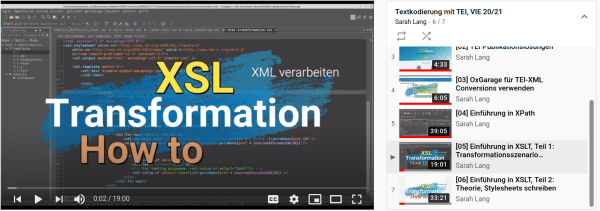
Teaching Materials: A German intro class to XPath and XSLT
Since you all probably already know that I’m a bit short on time but trying to keep this blog alive
read more Teaching Materials: A German intro class to XPath and XSLT
The “Should I include Digital Humanities in my grant proposal?” Guide for Humanities people
Many Humanities scholars feel like you can’t get a project funded anymore if it doesn’t include DH. Some even ask me “Do I have to include DH to get funded?” Well, that answer lies outside of my expertise. I can, however, answer the probably even more important question of whether you should include DH in your grant proposal for the main purpose of improving your chances at getting funded. And if you decide to do so, how to do it right. In this post, I will give you my thoughts on the topic and also provide a checklist you might want to use to answer this question for yourself at the end. As I trust you have already figured out, I am not the person granting you funding neither am I in any way involved in the progress (at least as of now). So please take the thoughts I share here for what they are: my two cents. I’m just
List of Resources for getting started with (teaching) digital methods
Having just attended a talk in an event on Digital Humanities and Neo-Latin, I was inspired to share a short list of introductory resources on DH, especially for teachers who feel more like Humanities scholars and don’t have tons of time to learn everything autodidactically. They can use those resources to learn for themselves and pass on this knowledge or pass on this link. But also, since you’ve found this blog, you’re already on a great path to learning DH! 🙂 I’ll try to keep this updated – and it’s not really done yet, so feel free to contribute. Discipline-independent DH dariahTeach: great MOOCs on many topics Source criticism in a digital age DARIAH-EU DH course registry EADH Courses List Digital Classics Article by yours truly in German: Digitale Lernplattformen und Open Educational Resources im Altsprachlichen Unterricht I. Technische Spielräume am Beispiel des ›Grazer Repositorium antiker Fabeln‹ (GRaF). It contains a few resources on digital resources and digital teaching, mostly
read more List of Resources for getting started with (teaching) digital methods
The question of questions: Am I ‘techie’ enough for (a) Digital Humanities (degree)?
For the last two years, I had the responsibility to mentor master’s degree students in the Digital Humanities or to advise those interested in a DH degree. Today I wanted to discuss the most frequently asked question and that is: “Am I ‘techie’ enough for (a) Digital Humanities (degree)?” and partly also “How much math is there in a DH degree?”. This is my Christmas present to you. I’m hoping to do something LaTeX-related again soon but LaTeX templates are currently a go-to relax thing for times when I really need relaxing. And feeling obliged to write about that takes the fun out of it for me at the moment, so sorry, yet another DH post for now. Let’s get straight to it. Part of this post consists of the text of an informational video I made in my responsibility as a mentor for the DH degree programm in Graz. You can watch the video instead, if you like. However,
read more The question of questions: Am I ‘techie’ enough for (a) Digital Humanities (degree)?
Where can I *actually learn* programming? (as DH and otherwise)
To my great surprise, lots of people regularly ask me where I learned to program. I have lots of posts on the subject and even multiple categories on the blog concerning the topic but maybe they’re “too disguised” under obscure titles for willing learners to actually find them. So I decided to give you a short summary with the key takeaways of what I’ve written on the topic so far and the most important links – boths to my other detailled blogposts and also on the resoures I would recommend as of now. However, before the “short summary” of takeaways and suggestions for willing learners, let me start with a deep dive into the very personal side of the question “Where did you actually learn to program?”. Now where did I actually learn to code? A Disclaimer To answer the question “Where did I actually learn to program?”, we need to talk about my journey first. And.. Well, in order
read more Where can I *actually learn* programming? (as DH and otherwise)
Machine Learning for the Humanities: A very short introduction and a not-so-short reflection
Machine Learning is one of those hot topics at the moment. It’s even starting to become a really hot topic in the Humanities and, of course, also in the DH. But Humanities and Machine Learning are not the most obvious combination for many reasons. Tutorials on how to run machine learning algorithms on your data are starting to pop up in large quantities, even for the DH. But I find it problematic that they often just use those methods, just show you those few lines of code to type in and that’s it. Frameworks have made sure that ML algorithms are easy to use. They actually have a super-low entry level programming-wise thanks to all those libraries. But the actual thing about ML is that you need to understand it or it’s good for nothing. (Ok, I admit there are some uses which are pretty straightforward and don’t need to be fully understood by users, such as Deep Learning powered
Transdisciplinary crossovers into the DH – The Don’ts and what can go wrong
Dear friends, today I want to illustrate some trans-disciplinary crossovers (into the DH) gone wrong. In earlier posts, I have already explained some of the dos (Looking at data with the eyes of a Humanist: How to apply digital skills to your Humanities research questions and Formulating Research Questions For Using DH Methods and What are ‘real’ Digital Humanities and how to get started?), so I assume I have you covered in that area. This is all very happy and positive – but I think I also owe it to you guys to give you an honest opinion of where you probably fucked up. It always hurts to learn these things and it’s more butterflies and rainbow-sprinkles to list all the empowering things you can do. But there are some traps as well and we don’t want you to fall into them. And if you already have, at least now you’ll have the closure to understand why you maybe have gotten rejected
read more Transdisciplinary crossovers into the DH – The Don’ts and what can go wrong
Looking at data with the eyes of a Humanist: How to apply digital skills to your Humanities research questions
In my recent post on how to get started doing DH, I basically said that the essence of being DH is looking at data with the eyes of a Humanist and gave some tips on how to get started in just 10 days. However, it’s not that easy. Learning digital skills and the problem of skill transfer A problem I see a lot is that H people fail to transfer their newly won practical DH skills to their own research questions. They don’t know how to look at their own material as data. They don’t know how to leverage digital methods to help answer their own research questions. But if it isn’t compatible with their own research, they’ll never deepen their knowledge enough to actually profit from their DH skills. If you don’t use them, they are forgotten quickly. So how do you make this transfer which I think is, so far, being neglected as a skill which has to
Formulating Research Questions For Using DH Methods
In the feedback forms I did on the DH classes I have taught over the last years, I got one feedback I didn’t expect: People were extremely grateful I had practiced with them how to formulate valid research questions which, apparently, no one had ever (really) done with them before. I found that quite astonishing because the DH are all about methods and methods are like specizalized tools. You need to know what you can use them for. So here’s the crashcourse. The Hammer and the Nail I want to start off with an analogy. A hammer is a specialized but not an extremely specialized tool. You can use it for a range of tasks, however, not all tasks are going to work equally well. Some might work but would actually require a more specialized tool if you had one. You can really use the hammer on about anything and almost always, something is going to happen. For example, you
read more Formulating Research Questions For Using DH Methods
Teaching Materials: Intro to basic NLP in CLTK for Classicists
Dear people, today I wanted to point you to a new github repository where I started to share some of
read more Teaching Materials: Intro to basic NLP in CLTK for Classicists
What are ‘real’ Digital Humanities and how to get started?
The title suggests a political discussion, however, this is not what I want to discuss here. (However, I had a ‘more political’ discussion planned for a while.) At a recent conference, I realized many people from the Humanities find it difficult to grasp what the DH even really are – because they are so diverse. I was told a colleague had gone to a short DH summer school but still feels like she doesn’t get what the DH really are. Or that she hasn’t learned any ‘real DH’. How does this happen? How can we make it better? Maybe, as a first step, by trying to answer what the DH are in a way which is easy to grasp for someone who isn’t already part of the DH: It is really an umbrella term for a wide range of topics ranging from digital edition to long-term archiving, digitizing facsimile scans of books or running analyses. I don’t promise to unveil
read more What are ‘real’ Digital Humanities and how to get started?
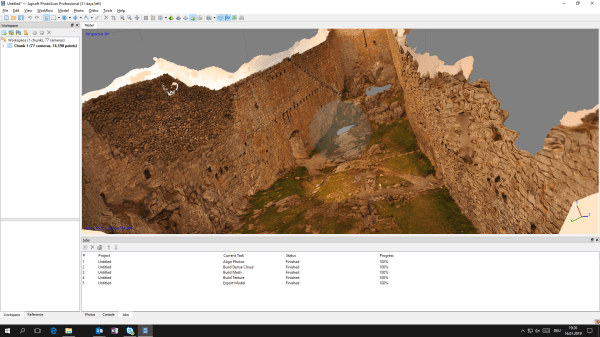
An easy intro to 3D models from Structure from Motion (SFM, photogrammetry)
Using photogrammetry to obtain 3D models has become one of those ‘hot topics’ lately. For that reason, I wanted to
read more An easy intro to 3D models from Structure from Motion (SFM, photogrammetry)
Understanding Scalability and Relative Values
What is the difference between 12pt and “format as heading“? Between 50px or 0.5\textwidth? Most of us know that we should always prefer relative to absolute values. But many who are new to webdesign or LaTeX don’t really get why. All of us who typeset papers and conference proceedings know that years of using MS Word does not necessarily teach you that difference either. This short post will try to remedy this in a quick and painless way 😉 In a WYSIWYG texteditor: Fontsize 12pt or “Format as Heading” In the case of a text editor, it is advisable to use the format templates rather than manually changing headings and so on for simple reasons: The information is stored as markup and if we tell the program what we want formatted as a heading, the machine gets semantic information about the text. Most people will understand that something is meant to be a heading when the font size is manually
 LaTeX Ninja'ing and the Digital Humanities