
In 2017, I had an internship at the German Historical Institute in Paris, where my task was to annotate around 1,200 regests. My job was to get them from source data in a Word document to TEI-XML in the end, but the project requirement was to keep everything in Word as long as possible. So, the annotations had to be done using Formatvorlagen (which I believe is called ‘macros’ or ‘stylesheets’ in English). In this post, I want to reflect on what helped me finish the annotation in three weeks (when previous estimates were that it would take about a year). Even if your project is different from this setup, these learnings may help you make your own annotation projects more efficient. Back then, I wrote a tutorial for people in the project who might want to continue my approach after I was gone. It’s in German but you can use LLMs to translate it for you if you’re interested.
XML
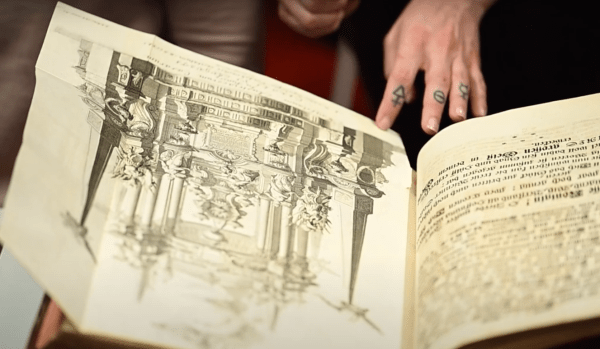
Why Do We Need to Digitize the Materiality of Pre-Modern Books?
Understanding the material aspects of historical books is crucial. Unlike modern books, copies from the same print run of historical
read more Why Do We Need to Digitize the Materiality of Pre-Modern Books?
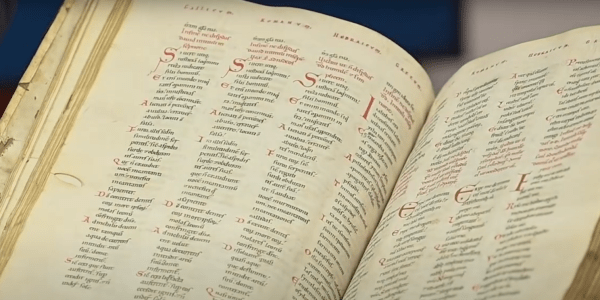
What do we mean by ‘materiality’ in the context of rare book digitization?
Everybody is talking about “materiality” but what does that even mean? It’s actually kind of hard to understand the materiality
read more What do we mean by ‘materiality’ in the context of rare book digitization?
First ever LaTeX Ninja workshop at Harvard: “Beyond TEI: Digital Editions with XPath and XSLT for the Web and in LaTeX”
It’s been awfully quiet on this blog but actually, there’s lots of Ninja activity going on right now: I’m excited to announce that I will give the first ever official LaTeX Ninja workshop, in person at Harvard in about two weeks! It’s called “Beyond TEI: Digital Editions with XPath and XSLT for the Web and in LaTeX”. (Apart from that, there’s a short book review coming up in TUGboat.) Since there probably are a good number of people who would be interested in such a workshop but can’t attend in person, I will share the slides and teaching materials on Github later on. That way, they can be reused for self-study. This blogpost gives somewhat of an outline of the contents of the workshop and contains links to related posts on this blog. Participants might want to read some of them in preparation or as an additional resource. [Get to the github repo with all the materials (`additional resources’ directory)
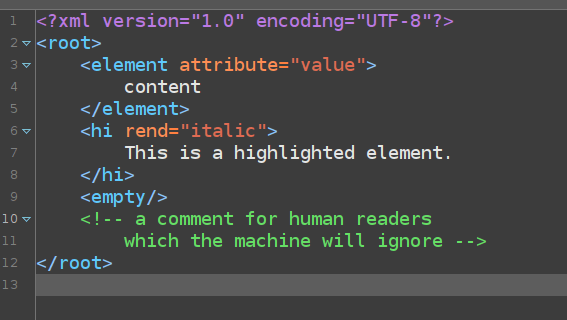
A shamelessly short intro to XML for DH beginners (includes TEI)
As some of you might know, I have been promising to provide an intro to XML for a long time.
read more A shamelessly short intro to XML for DH beginners (includes TEI)
[Guest Post] Reflection on my #100DaysOfDH challenge experience (by Philip Allfrey)
As you probably know, I started the #100DaysofDH challenge on this blog during the first few weeks of Covid lockdown.
read more [Guest Post] Reflection on my #100DaysOfDH challenge experience (by Philip Allfrey)
Does LaTeX count as “programming”?
Today I wanted to talk about a common question I come across: Does LaTeX count as programming? Many people dismiss this question directly with a no. But I say the answer is not that simple and depending on how you practice LaTeX can definitely be ‘yes’ much more than you might think! Also, something I really don’t appreciate is people meaning to degrade LaTeX when saying using LaTeX has nothing to do with programming (because it does and most people who think that way have just never seen LaTeX being used more like programming). LaTeX is, strictly speaking, a programming language and Turing-complete. Or rather, LaTeX is a macro package for TeX which is the actual Turing complete programming language. The typesetting-specific tools LaTeX provides probably can’t, however, be considered a full programming language on their own anymore. You could theoretically do anything with it, though it might just not be the easiest possible way to accomplish your ends (unless
JATS-XML to LaTeX transformations
As per request, I wanted to address the subject of JATS-XML to LaTeX transformations today. The post might be interesting for you still even if you’re not particularly interested in said transformation since it will address more general requirements for transformations as well. What is JATS-XML and why would we transform from and into it? First things first: What is JATS-XML? It is an XML standard called the Journal Article Tag Suite (JATS). Journal Article Tag Suite … is an application of NISO Z39.96-2019, which defines a set of XML elements and attributes for tagging journal articles and describes three article models. The content on this site is the supporting documentation for the standard. JATS is a continuation of the NLM Archiving and Interchange DTD work begun in 2002 by NCBI. (source & JATS documentation) It has the <article> element, and in that, you get <front>, <body>, and <back>. Learn more about it and see examples in the links.
What are ‘real’ Digital Humanities and how to get started?
The title suggests a political discussion, however, this is not what I want to discuss here. (However, I had a ‘more political’ discussion planned for a while.) At a recent conference, I realized many people from the Humanities find it difficult to grasp what the DH even really are – because they are so diverse. I was told a colleague had gone to a short DH summer school but still feels like she doesn’t get what the DH really are. Or that she hasn’t learned any ‘real DH’. How does this happen? How can we make it better? Maybe, as a first step, by trying to answer what the DH are in a way which is easy to grasp for someone who isn’t already part of the DH: It is really an umbrella term for a wide range of topics ranging from digital edition to long-term archiving, digitizing facsimile scans of books or running analyses. I don’t promise to unveil
read more What are ‘real’ Digital Humanities and how to get started?
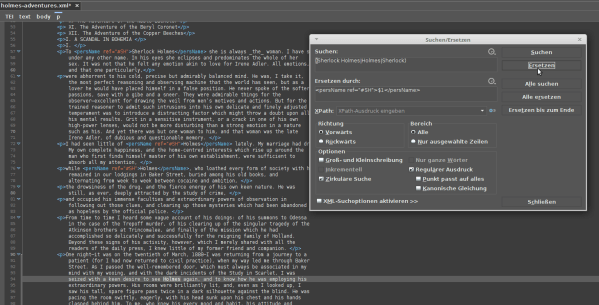
Automating XML annotation: Get more done using RegEx Search&Replace and xsl:analyze-string
Annotation is a fundamental part of the DH. But often, us DH people don’t actually do the annotation. We do
read more Automating XML annotation: Get more done using RegEx Search&Replace and xsl:analyze-string
 LaTeX Ninja'ing and the Digital Humanities