
Twitter is an important professional networking platform for the Digital Humanities. But it’s not exactly self-evident how to make it work in your favour. This part explains all you need to know on retweet bots and hashtags. As some of you might remember, I did a Twitter Engagement Experiment at some time in autumn last year. Now I wanted to share my most important learnings, so you can make your Twitter presence more effective with just as little work as you want to put in. Actually, this was all just meant to be one post but it got so crazy long that I decided to make it into a series of digestible short posts. More Twitter Growth/Strategy advice 4) Use the power of (retweet) bots. During the last year, I have played around with bots or partly-automating retweeting on some Twitter accounts (like the epigrammetry blog’s Twitter) using bots. I created a feminist bot, a #100DaysofDH challenge bot, a #digiclass
DH tools and techniques
In DH tools and techniques I want to introduce methods useful to the DH. I want to explain some tools with enough (but still minimalistic) introductory information which will get you going without too much clutter. Also, I feel that a ‘market’ of DH tutorials starts to become available, however, what I think they are missing, for the most part, are the possible applications. Why should I learn a new method or tool when I can’t (yet) see what benefit it could have for my own research? Why learn a tool I don’t know what to use for? This has happened to me way to many times which is why I hope to make it better ;)
In these techniques, I want to cover simple things, like XML and Annotation (which has its own category) but also some methods belonging to what has caused somewhat of a stir on Twitter under the (somewhat problematic) name of ‘Computational Humanities’.
Improve your Twitter Strategy: The Ninja’s “How to better promote your content on Twitter” Guide. Part 1
Twitter is an important professional networking platform for the Digital Humanities. But it’s not exactly self-evident how to make it work in your favour. As some of you might remember, I did a Twitter Engagement Experiment at some time in autumn last year. Now I wanted to share my most important learnings, so you can make your Twitter presence more effective with just as little work as you want to put in. I will start with the basics and common advice you can find online in this first post and then add some more info and reflection on my personal experiment in the next one. Actually, this was all just meant to be one post but it got so crazy long that I decided to make it into a series of digestible short posts. This first one will start with the very Twitter basics and why you might want to start your own “Twitter Engagement” experiment. Am I back to
Machine Learning for the Humanities: A very short introduction and a not-so-short reflection
Machine Learning is one of those hot topics at the moment. It’s even starting to become a really hot topic in the Humanities and, of course, also in the DH. But Humanities and Machine Learning are not the most obvious combination for many reasons. Tutorials on how to run machine learning algorithms on your data are starting to pop up in large quantities, even for the DH. But I find it problematic that they often just use those methods, just show you those few lines of code to type in and that’s it. Frameworks have made sure that ML algorithms are easy to use. They actually have a super-low entry level programming-wise thanks to all those libraries. But the actual thing about ML is that you need to understand it or it’s good for nothing. (Ok, I admit there are some uses which are pretty straightforward and don’t need to be fully understood by users, such as Deep Learning powered
Create your Tweepy/AWS-powered Twitter bot in a day
This post wants to convince you to try out creating a Twitter bot using Python Tweepy and AmazonAWS Lambda because it’s easy and fun. Of course, you can use any other utilities but Tweepy and AWS Lambda are the ones I tried. This is not a full tutorial but I can make one if anyone is interested. Inspired by the #100DaysofDH challenge In this post, I will just give you some basic Twitter knowledge, links for what you need to know to get it done and a link to the github of my #100DaysofDH challenge for which I implemented such a bot. If you want more guidance, please let me know. Also, read the post on the challenge because I noted down some restrictions I realized the Twitter automation guidelines impose on bots as I went along. In my example, I think I’m in fact doing one or two things which you actually shouldn’t do (I think bots shouldn’t like
read more Create your Tweepy/AWS-powered Twitter bot in a day
Looking at data with the eyes of a Humanist: How to apply digital skills to your Humanities research questions
In my recent post on how to get started doing DH, I basically said that the essence of being DH is looking at data with the eyes of a Humanist and gave some tips on how to get started in just 10 days. However, it’s not that easy. Learning digital skills and the problem of skill transfer A problem I see a lot is that H people fail to transfer their newly won practical DH skills to their own research questions. They don’t know how to look at their own material as data. They don’t know how to leverage digital methods to help answer their own research questions. But if it isn’t compatible with their own research, they’ll never deepen their knowledge enough to actually profit from their DH skills. If you don’t use them, they are forgotten quickly. So how do you make this transfer which I think is, so far, being neglected as a skill which has to
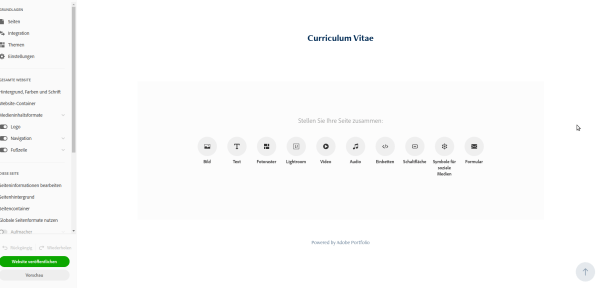
An inside look into the ‘competition’: Testing Adobe Creative Cloud
It’s not Sunday but since no one really cares anymore what day it is lately with this Corona lockdown situation,
read more An inside look into the ‘competition’: Testing Adobe Creative Cloud

Teaching Materials: Intro to basic NLP in CLTK for Classicists
Dear people, today I wanted to point you to a new github repository where I started to share some of
read more Teaching Materials: Intro to basic NLP in CLTK for Classicists
What are ‘real’ Digital Humanities and how to get started?
The title suggests a political discussion, however, this is not what I want to discuss here. (However, I had a ‘more political’ discussion planned for a while.) At a recent conference, I realized many people from the Humanities find it difficult to grasp what the DH even really are – because they are so diverse. I was told a colleague had gone to a short DH summer school but still feels like she doesn’t get what the DH really are. Or that she hasn’t learned any ‘real DH’. How does this happen? How can we make it better? Maybe, as a first step, by trying to answer what the DH are in a way which is easy to grasp for someone who isn’t already part of the DH: It is really an umbrella term for a wide range of topics ranging from digital edition to long-term archiving, digitizing facsimile scans of books or running analyses. I don’t promise to unveil
read more What are ‘real’ Digital Humanities and how to get started?
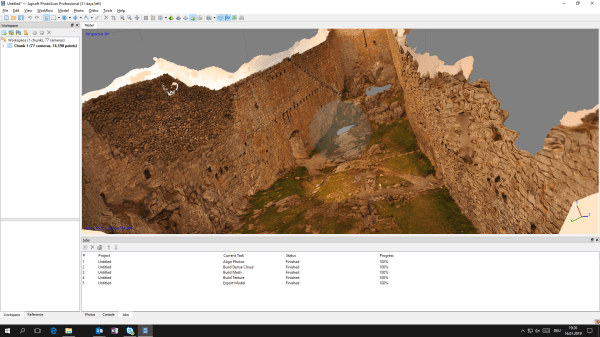
An easy intro to 3D models from Structure from Motion (SFM, photogrammetry)
Using photogrammetry to obtain 3D models has become one of those ‘hot topics’ lately. For that reason, I wanted to
read more An easy intro to 3D models from Structure from Motion (SFM, photogrammetry)
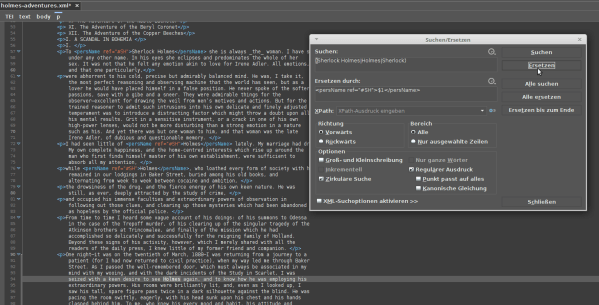
Automating XML annotation: Get more done using RegEx Search&Replace and xsl:analyze-string
Annotation is a fundamental part of the DH. But often, us DH people don’t actually do the annotation. We do
read more Automating XML annotation: Get more done using RegEx Search&Replace and xsl:analyze-string
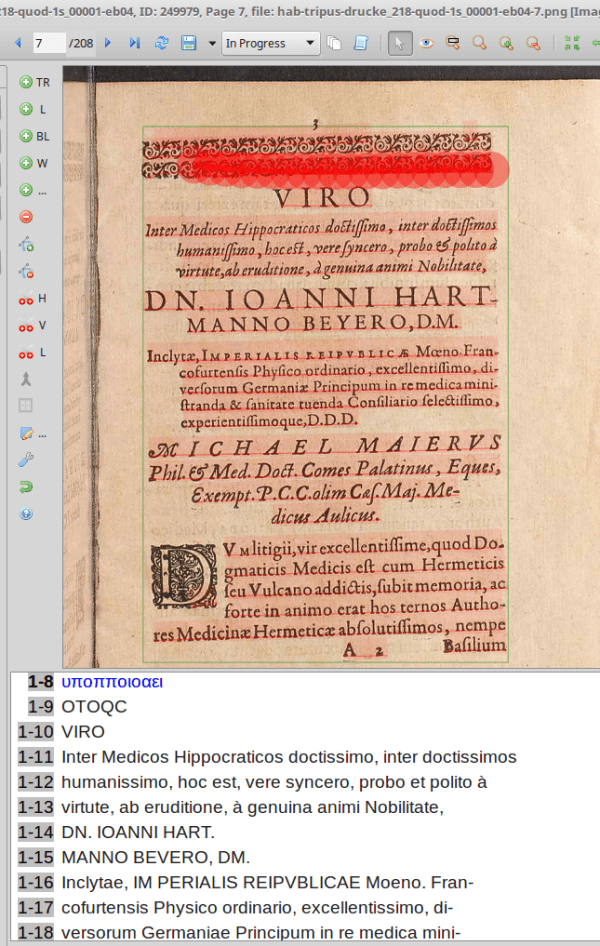
How to historical text recognition: A Transkribus Quickstart Guide
Today I wanted to share a little quickstart tutorial for the Transkribus Software. Its purpose is Handwritten Text Recognition (HTR)
read more How to historical text recognition: A Transkribus Quickstart Guide
Simple XML to LaTeX Transformation Tutorial
Today, I wanted to share this super simple XML to LaTeX tutorial. Using XSLT, you are going to transform XML data to LaTeX output which you can then go on to compile into your desired output PDF. There will be no fancy stuff whatsoever in this post, just the basics and what to keep in mind with these transformations. It is the quick intro to XML to LaTeX I did with my students a while ago which was done one day after they had their first contact with XSLT, so it should really be beginner-friendly. I labeled it “Advanced LaTeX” anyway because I think starting to automate things is always a step in the right direction 😉 Edit March 2022: Sadly, with WordPress changes (and source code support never working all that well to begin with), the code formatting of this post is pretty broken. Since it tends to re-break soon after I fix it, here is a similar /
 LaTeX Ninja'ing and the Digital Humanities